Floorball
OVERVIEW & OBJECTIVE

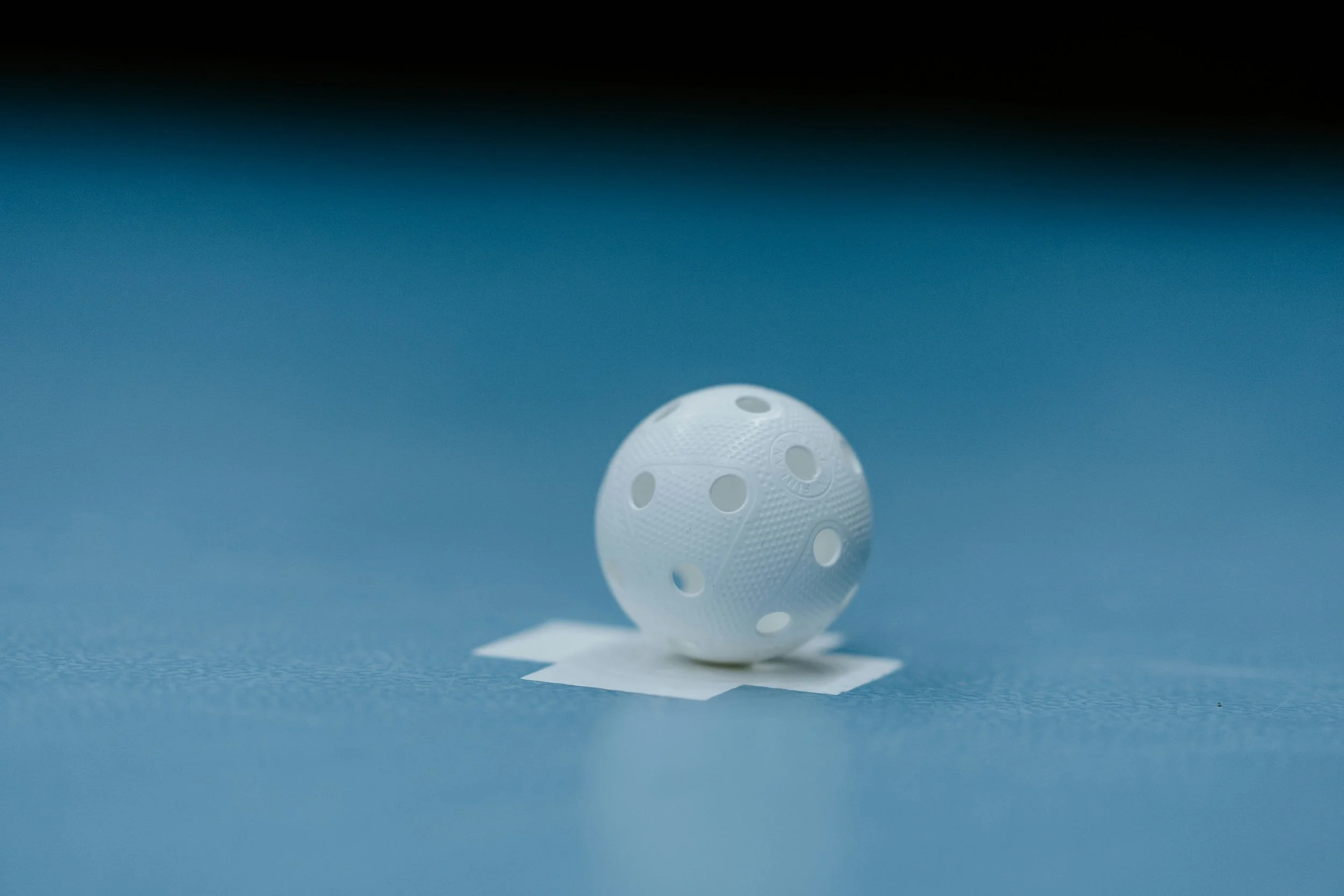
The objective of floorball is to score more goals than the opposing team by using a stick to control and hit the ball into the opponent’s goal.

FLOORBALL
Floorball is played:
In a gymnasium
On a flat, hard surface
Outdoor area surrounded by low boards
EQUIPMENT
OFFICIAL
Equipment
Floorball sticks
Floorball balls
Goals
Protective eyewear
Goalie mask
ALTERNATIVE
Equipment
Shortened sticks or sticks with adapted grips (e.g., larger handles, strap-on
grips)
Use lighter, larger, or textured balls (e.g., beeper balls for low vision)
SPACE Adaptations
Reduce court size for beginners to lower physical demands.
Create zones (e.g., passing zone, shooting zone) to simplify movement expectations.
Adjust the placement or size of goals to match skill level.
Use a smooth surface for those who use a chair.
Create safe zones where players can pause.
TASK Adaptations
Simplify instructions by using clear, simple, language, visuals, and demonstrations.
Focus on one skill at a time.
Simplify rules (e.g., focus on passing only, without shooting initially).
Break the skill into smaller steps (dribbling, receiving, then passing).
Allow extra time or reduce repetition requirements for practice.
EQUIPMENT Adaptations
Shorten/lengthen sticks.
Lightweight sticks – Easier to maneuver.
Sticks with larger or ergonomic grips.
Strap-on sticks – Can attach sticks to the hand or arm for players.
Adjustable or flexible shaft sticks.
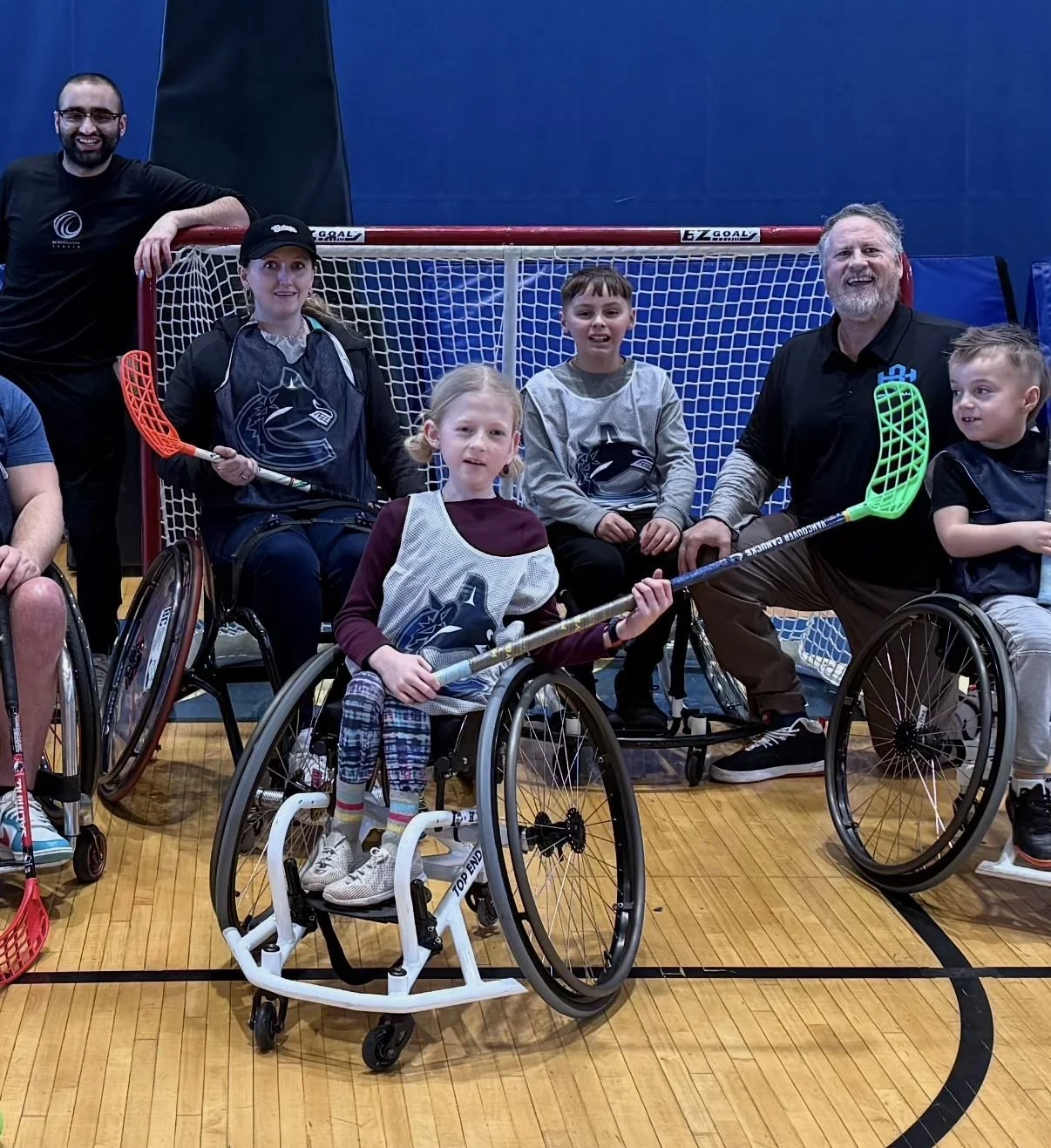
T-sticks / mounted sticks for wheelchairs.
Larger, lighter, or textured balls, auditory balls.
Adjust goal size and height.
PEOPLE Adaptations
Provide individualized goals.
Pair less experienced players with supportive partners.
Reduce team sizes to ensure everyone gets more touches.
Use peer coaching or buddy systems for skill support.
Allow one‑on‑one support or adult helpers if needed.
TEACHING CUES FOR MOVEMENT SKILLS
STICK GRIP
HOW TO DRIBBLE
HOW TO SHOOT
HOW TO PASS
STICK GRIP
Top hand: Place at the top of the stick- top hand guides
Bottom hand: About halfway down- bottom hand powers
Grip: Relaxed, not tight
Stick angle: Keep flat on the floor
Wrist position: Soft and flexible for ball control
Adaptations:
Strap-on sticks or ergonomic grips for students with limited hand strength
Shortened sticks for seated or wheelchair players
HOW TO DRIBBLE
Stick & hand position: Top hand guides, bottom hand powers.
Blade flat on the floor.
Knees bent, weight on toes, stick close to body.
Small, quick, quiet taps forward and sideways.
Keep the ball in front.
Eyes up.
Adaptations:
Space: Short dribbling lanes for beginners.
Task: Slow pace to start.
Equipment: Lighter or shorter sticks.
People: Peer support or paired practice.
HOW TO SHOOT
Hand Placement When Shooting
Top hand: Grip the stick near the top of it.
Bottom hand: Place lower on the stick (about 12–14 inches apart).
Tip: Hands closer together = more control and accuracy.
Wrist Shot: Teaching Cues
Start the ball near the heel to middle of the blade.
Shift weight from back foot to front foot.
Follow through toward the target with your hands.
Sweep Shot: Teaching Cues
Ball in middle of blade (angled towards the floor), stick near back foot.
Bottom hand pushes down for power.
Sweep stick blade smoothly on floor and shift weight from back foot to front foot.
Plant front foot and finish pointing at target.
HOW TO PASS
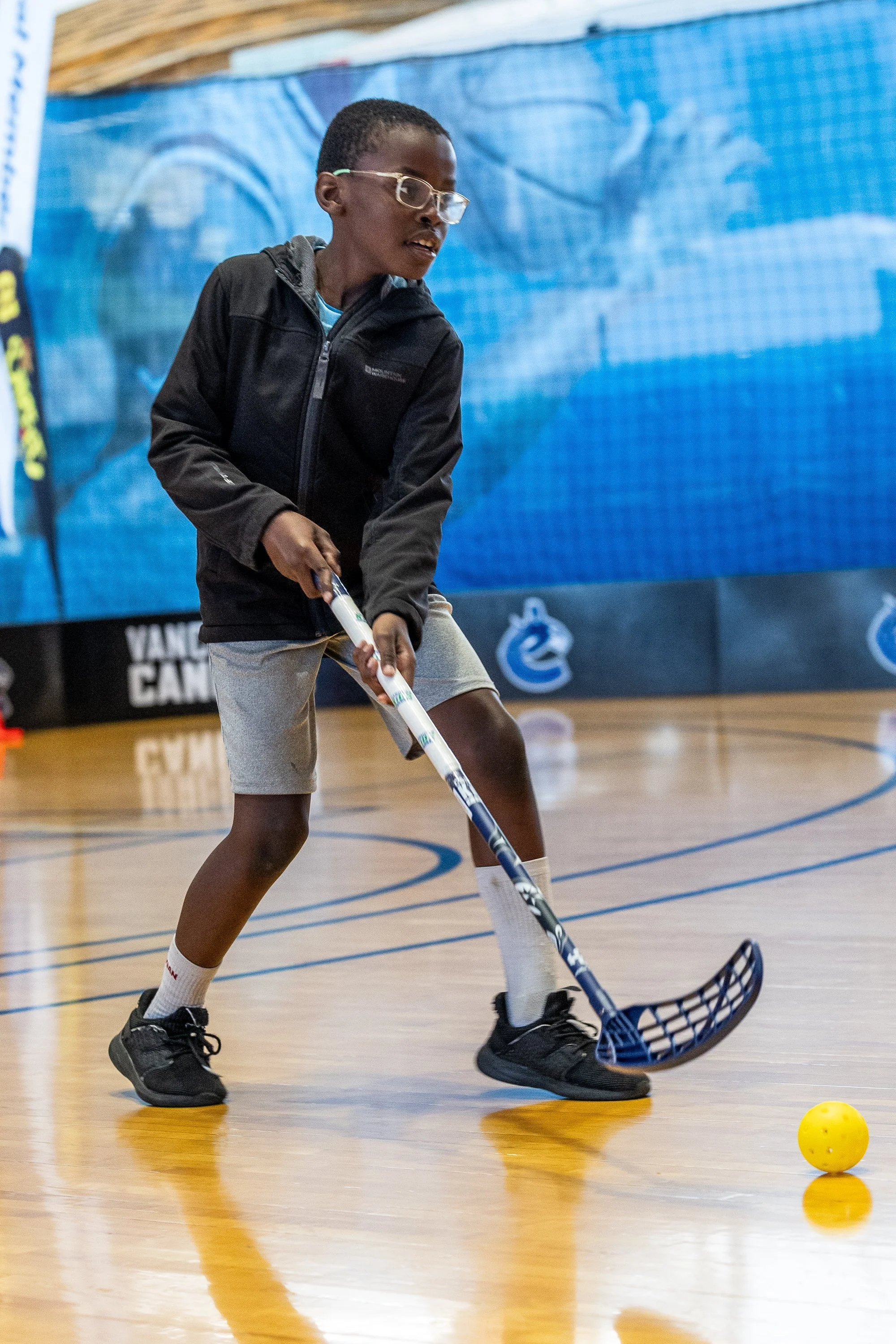
Push pass, using both hands on the stick.
Hands: Top hand guides, bottom hand powers the push.
Follow-through: Stick points toward target (“Follow the ball with your stick”).
Distance: Start short, gradually increase.
Cue: “Soft and accurate, not hard and wild”.
Adaptations:
Lighter/soft balls for beginners.
Stationary passing before moving.
Pair stronger and emerging players.
ACTIVITIES & SKILL DEVELOPMENT
WALL PASS
PAIR UP PASSING
OBSTACLE COURSE
ALIENS AND FROGS
DRIBBLE AND SHOOT
Photos courtesy of Junior Canucks Floor Hockey
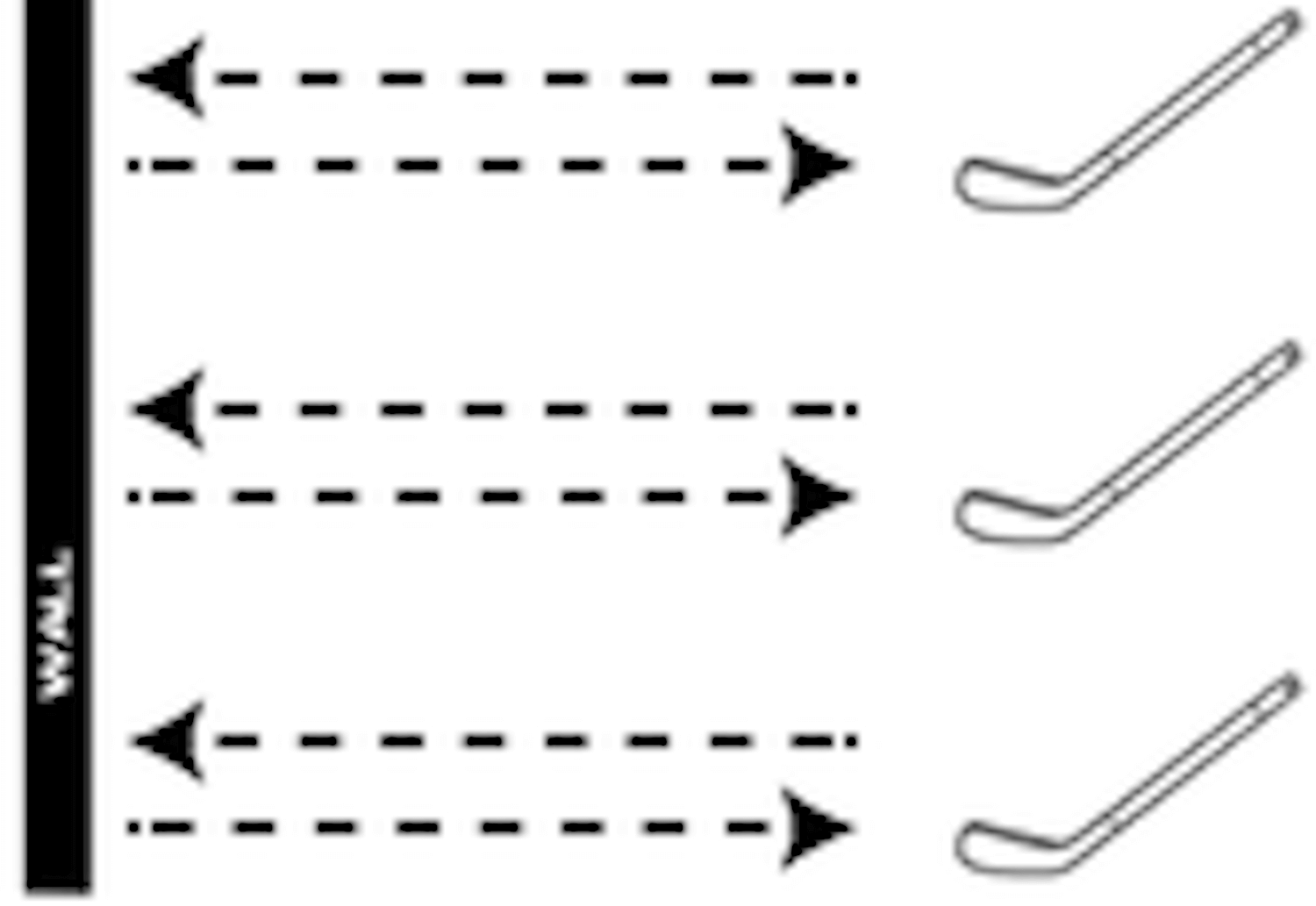
WALL PASS
Pass the ball against the wall at different heights.
Maintain a consistent tempo and rhythm when passing back and forth.
Observe how the ball rebounds off the wall.
Adjust hand position and readiness when receiving the ball.
Control the speed and accuracy of each pass.
Focus on smooth transitions between passing and receiving.
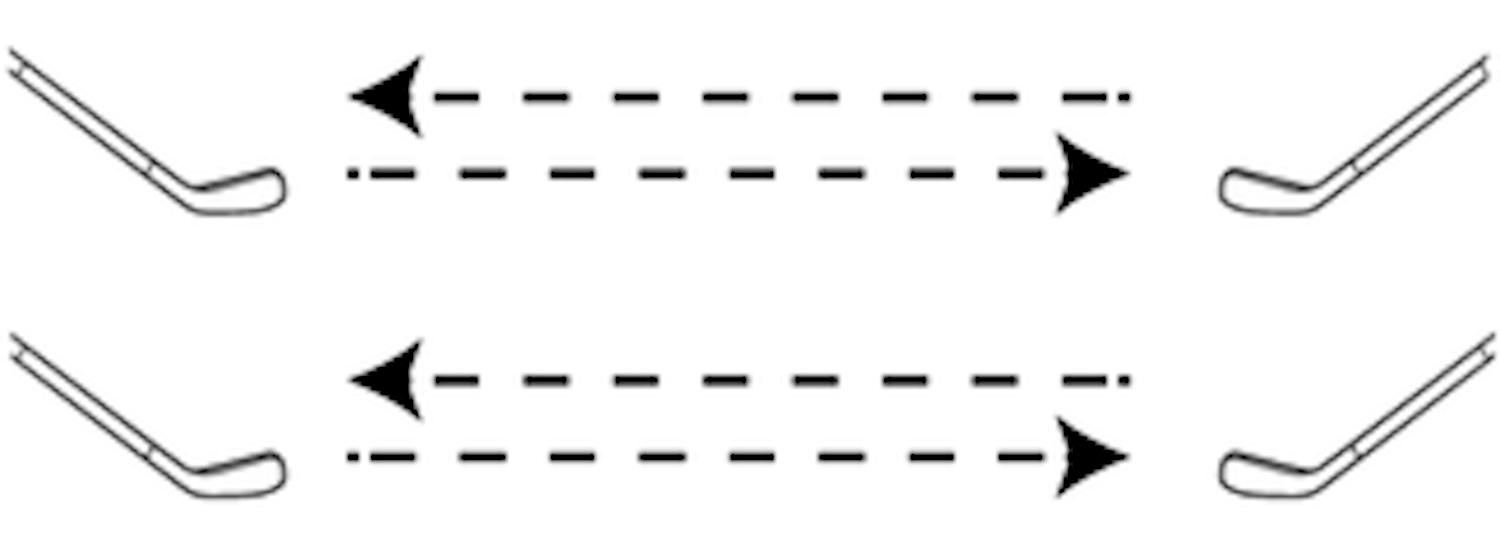
PAIR UP PASSING
Pair up with another classmate.
Practice flat (push) passes along the floor.
Practice backhand passes for control on both sides.
Practice airborne passes to vary height and distance.
Practice give-and-go passes (pass, move, receive).
Focus on accuracy, control, and timing.
Communicate with your partner and stay ready to receive.
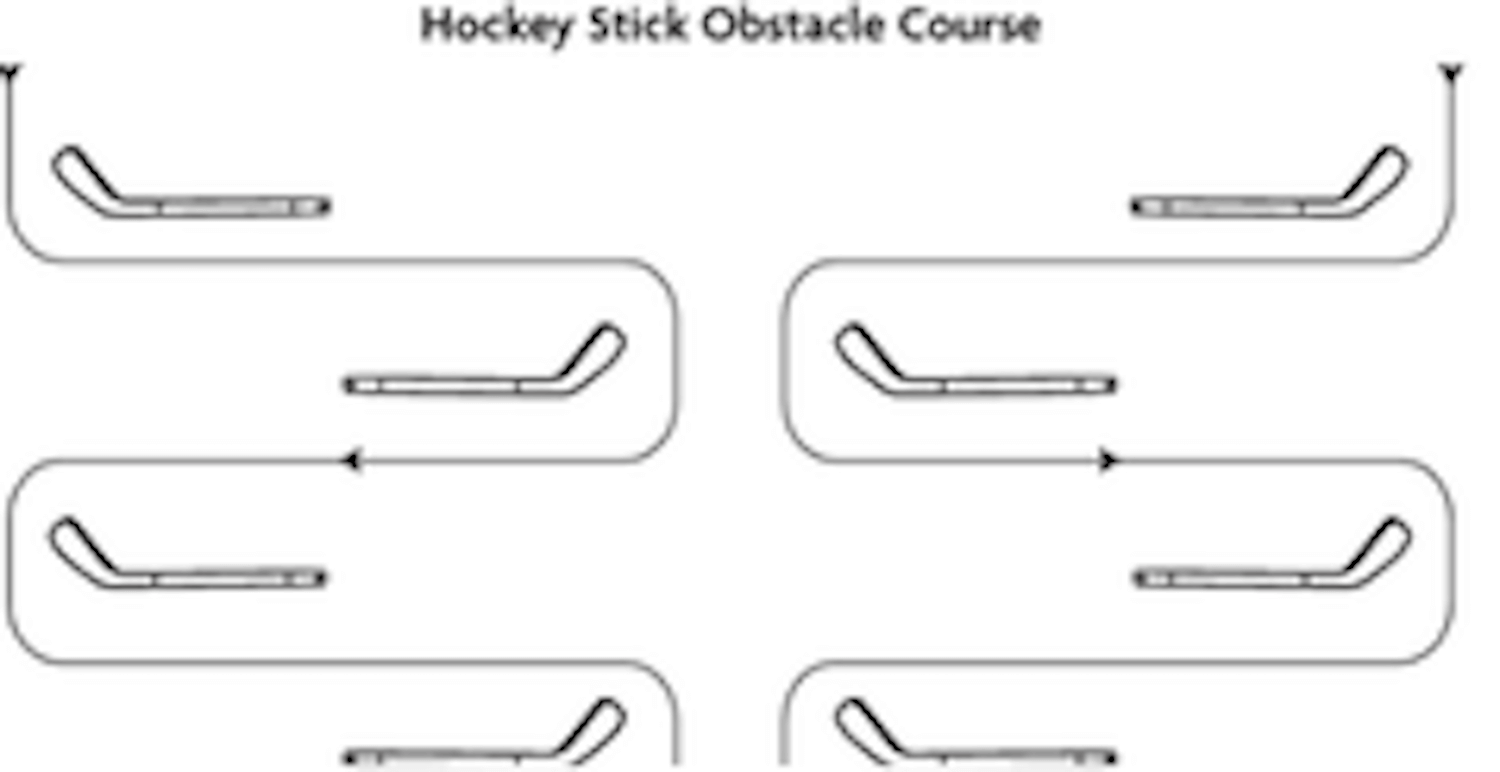
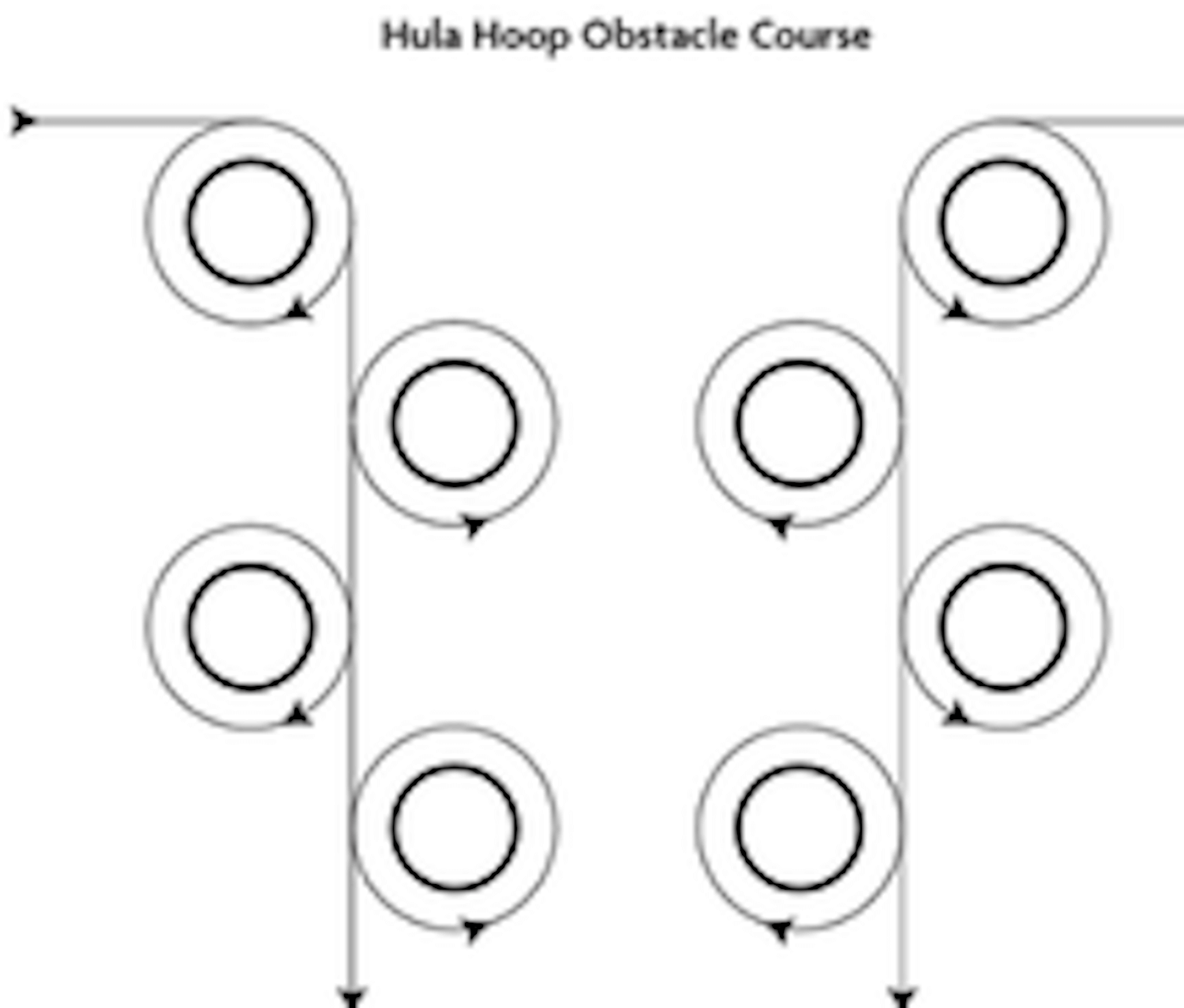
OBSTACLE COURSE
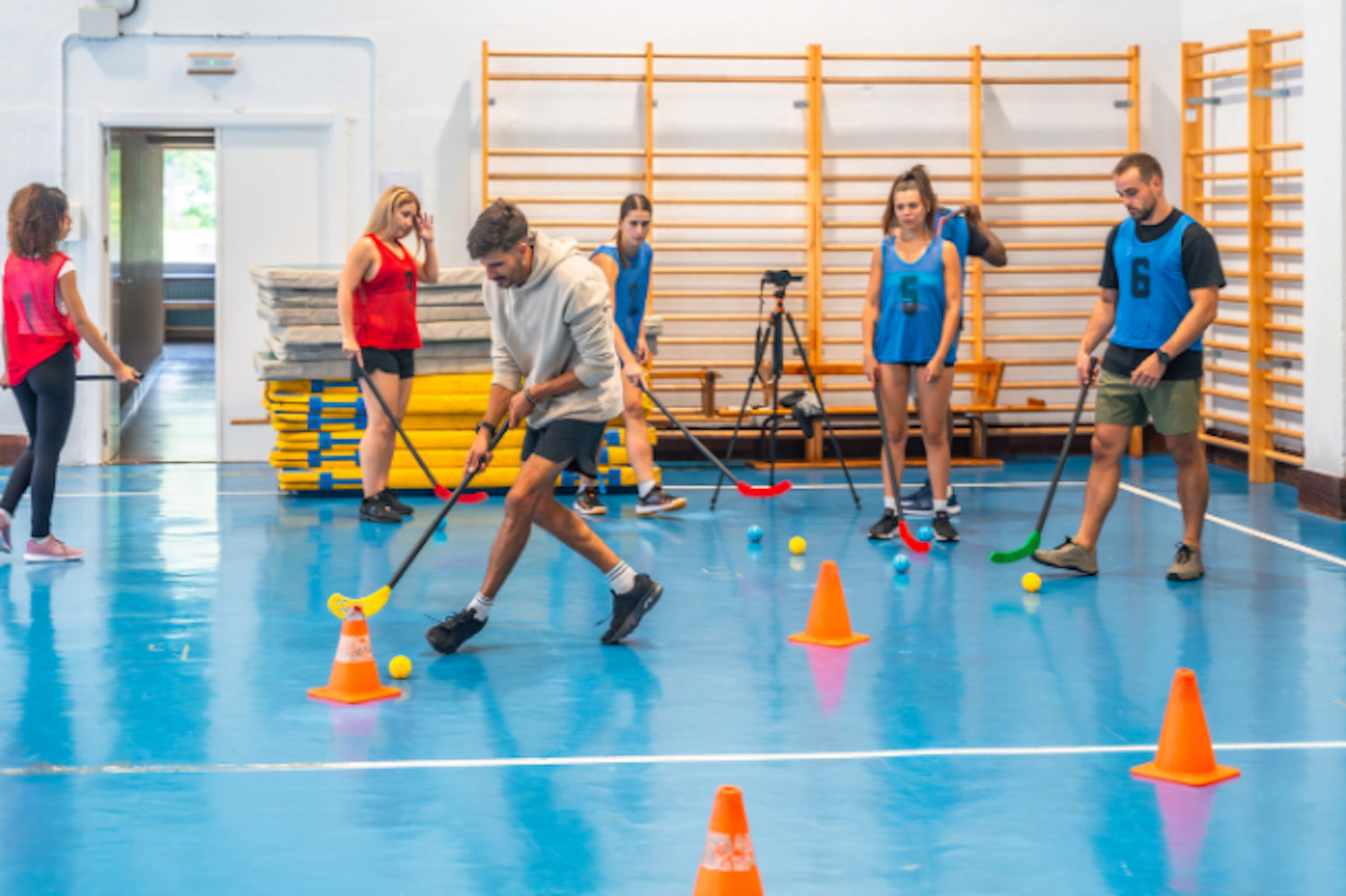
Set up cones and various objects in a straight or zig-zag line.
Use equipment such as cones, hoops, noodles, or sticks.
Form two or four lines for continuous movement.
Players dribble the ball around each obstacle.
Begin at a slow pace to focus on control.
Gradually increase speed with each round.
Emphasize head up, soft hands, and ball control.
ALIENS AND FROGS
Designate 2 students to start as the Aliens and the rest are Frogs.
Each Frog starts with a ball.
Frogs move around the gym, protecting their ball and away from Aliens.
Aliens attempt to steal a Frog’s ball.
Once stolen, Aliens shoot the ball in a net that is placed around the gym.
If the ball goes into the net, that Frog becomes an Alien.
If the ball does not go into the net, Frogs may steal the ball back.
The game continues until only one Frog remains.
DRIBBLE AND SHOOT
Divide the class into small groups, each group behind a cone.
Set up cones in a weaving pattern toward the net.
One student at a time dribbles the ball through the cones.
After the last cone, the student shoots on the net and retrieves their ball.
Add goalies from each team to the nets.
ADDITIONAL LEARNING
Floorball sticks are pre-bent by the manufacturer.
Sticks are made for right-handed or left-handed players choose a stick that matches your dominant hand.
Stick height should reach your belly button.
Do not bend the blade—it is already shaped.
REFERENCES
Junior Canucks Floor Hockey - Videos.
Inclusion of Students of All Abilities in School-Based Physical Activity Experiences. PHE Canada. 2023. Retrieved May 15, 2025. School-Based Physical Activity Experiences for Students of All Abilities | PHE Canada.
Our gratitude to Junior Canucks Floor Hockey for sharing their curriculum with us, which is embedded throughout and supported the adaptations we have included.
The PLAY Resource HUB